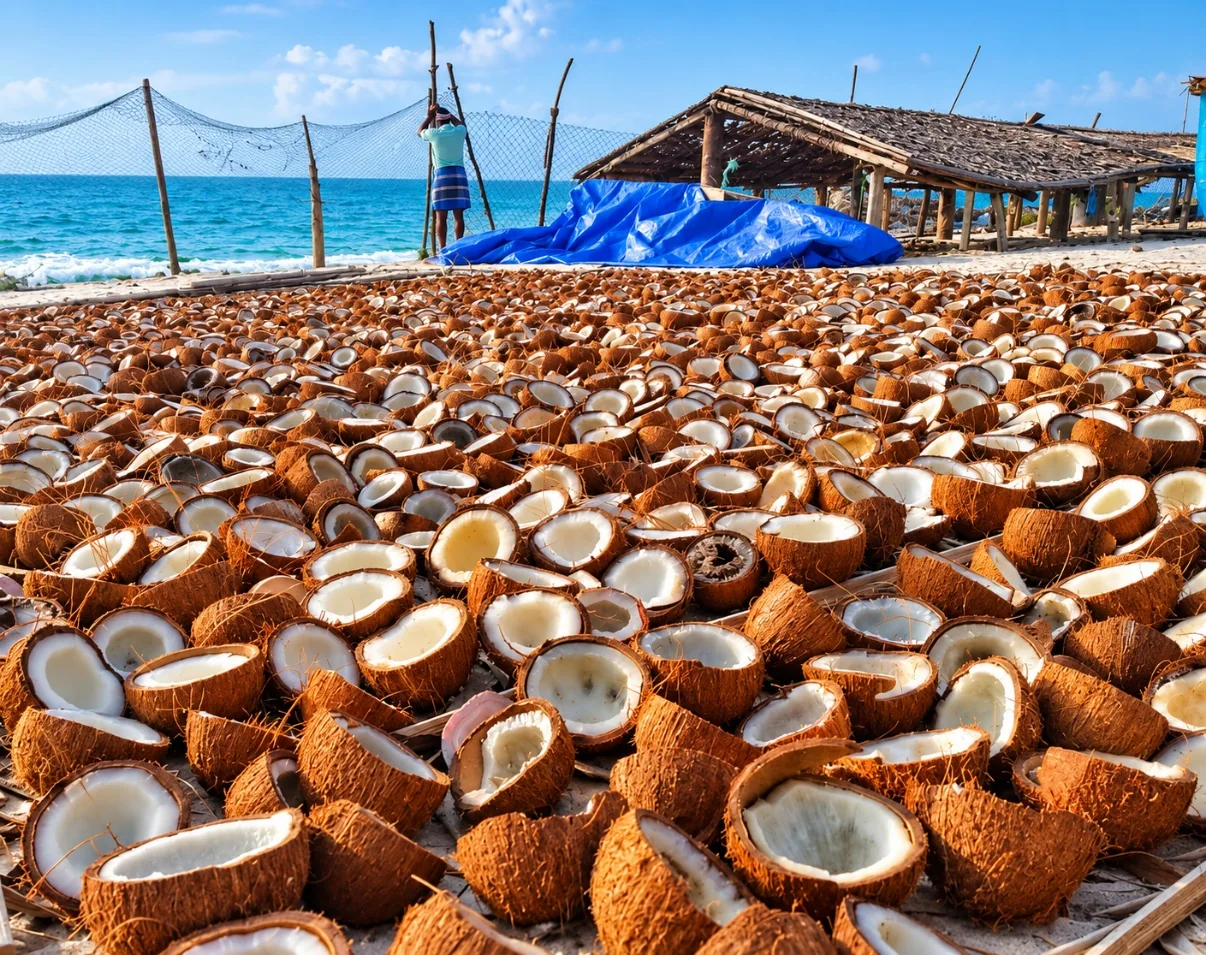
Palm springs eternal
A coconut palm is a landscape, a livelihood and a remarkable store of useful materials.
From a boat’s makeshift stove to the family kitchen, food tells the story of a changing archipelago.
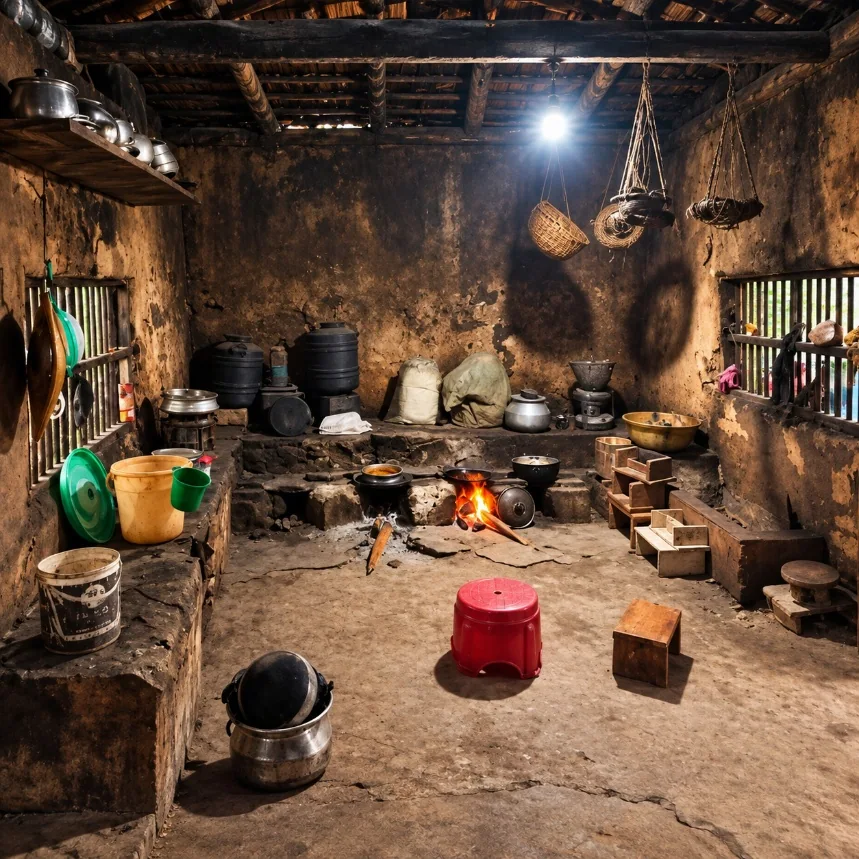
In the Kavaratti home described in the source essay, a modern kitchen opens into a very different cooking space. Beyond the gas stove and refrigerator is a wood-fired hearth, with smoke-darkened vessels and the tools of everyday island cooking.
The two spaces serve different needs. Modern appliances make daily work easier; the older hearth supports slow cooking and fish smoking, and remains useful when power or fuel supplies are interrupted. Together, they show a food culture adapting without losing its memory.
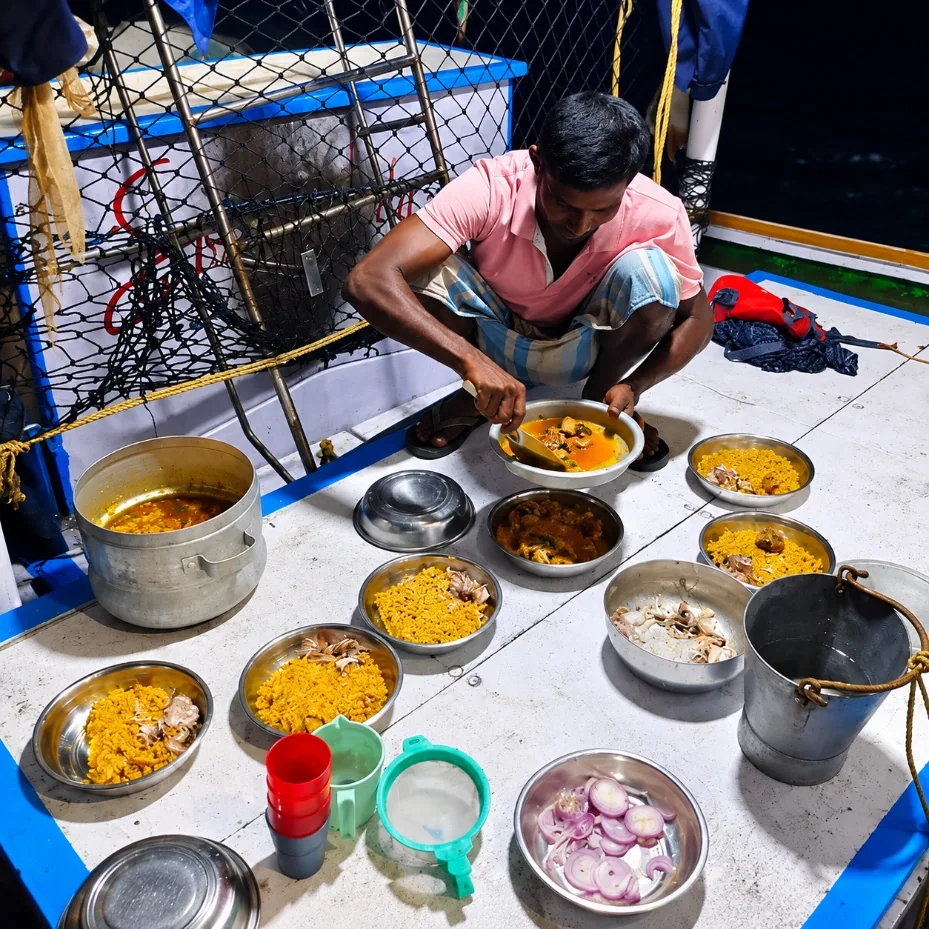
Tuna appears in coconut-rich curries, fried snacks, pickles and mas, the dried fish that can be stored and traded. The story follows boat biryani prepared during fishing trips: fresh fish, rice, spices and the ingenuity required to cook on a moving deck.
Women’s work on the exposed reef flats brings another kind of knowledge to the table. Gleaning for octopus, small fish and shellfish depends on an understanding of tides, hiding places and the short window of low water. These catches contribute to family meals and local food traditions.
Coconut supplies milk, oil and flesh for cooking, while husks fuel fires and leaves become useful household materials. Mainland connections are just as visible: pathiri, puttu, appam and parotta sit alongside preparations shaped by island ingredients.
At celebrations, kilanji brings delicate rice-and-egg crepes together with sweet coconut milk. In Minicoy, tuna preparations such as mus kavaab reflect the island’s close cultural relationship with the Maldives. The source also records batla appam from Andrott, fish broths and generous afternoon spreads of fruit, bananas and payasam.
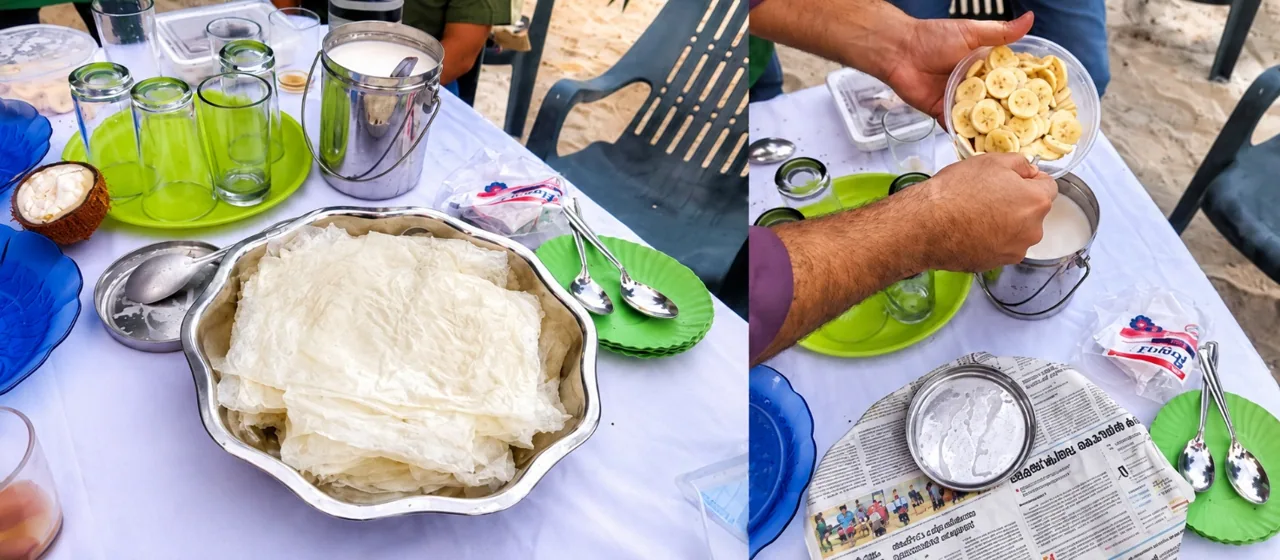
Beachfront cafés, packaged foods and new restaurant menus are changing the islands’ eating habits and social spaces. Yet traditional dishes continue through family teaching, shared meals and local food events.
Food here is also a story of resources. Freshwater, fuel, fish and reliable transport all matter. Preserving culinary knowledge means understanding those relationships, as well as remembering a recipe.
Adapted from Eat, Pray, Fish.docx. This is a cultural account based on the supplied material. Cooking scenes describe traditions; they are not food-safety or preservation instructions.
About this journal’s editorial approach ↗A coconut palm is a landscape, a livelihood and a remarkable store of useful materials.
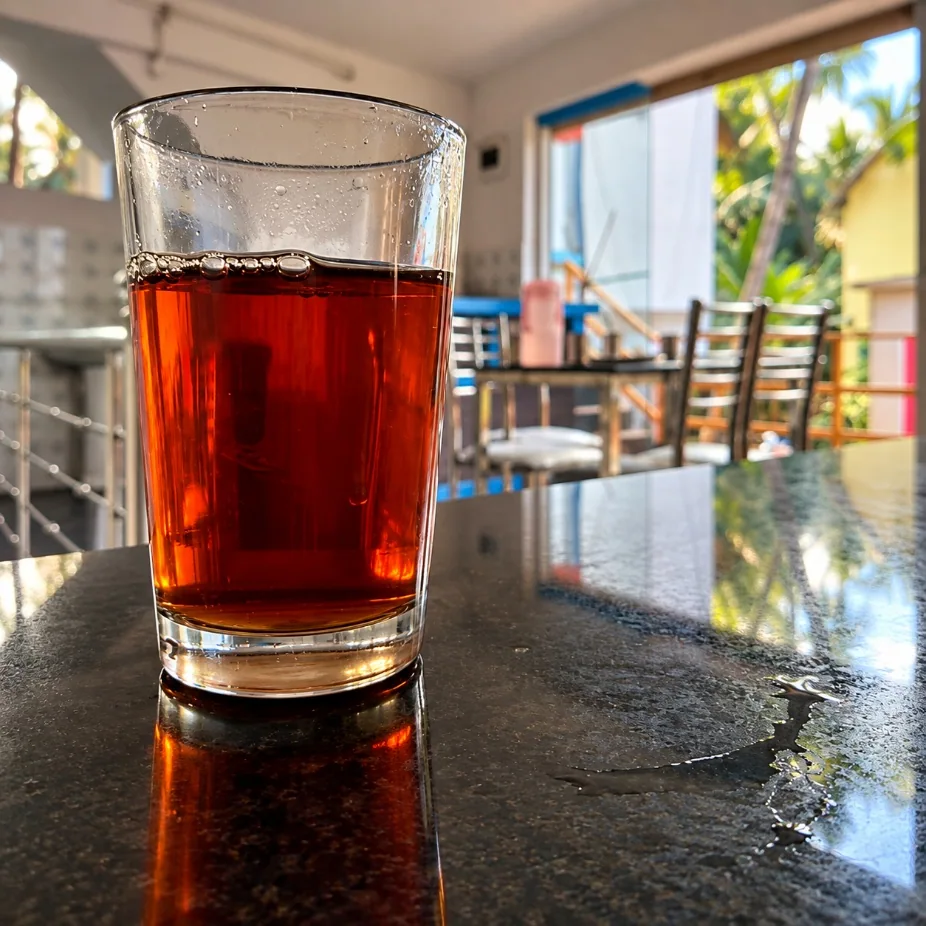
At a tea shop table, the pace of island life becomes a little easier to understand.