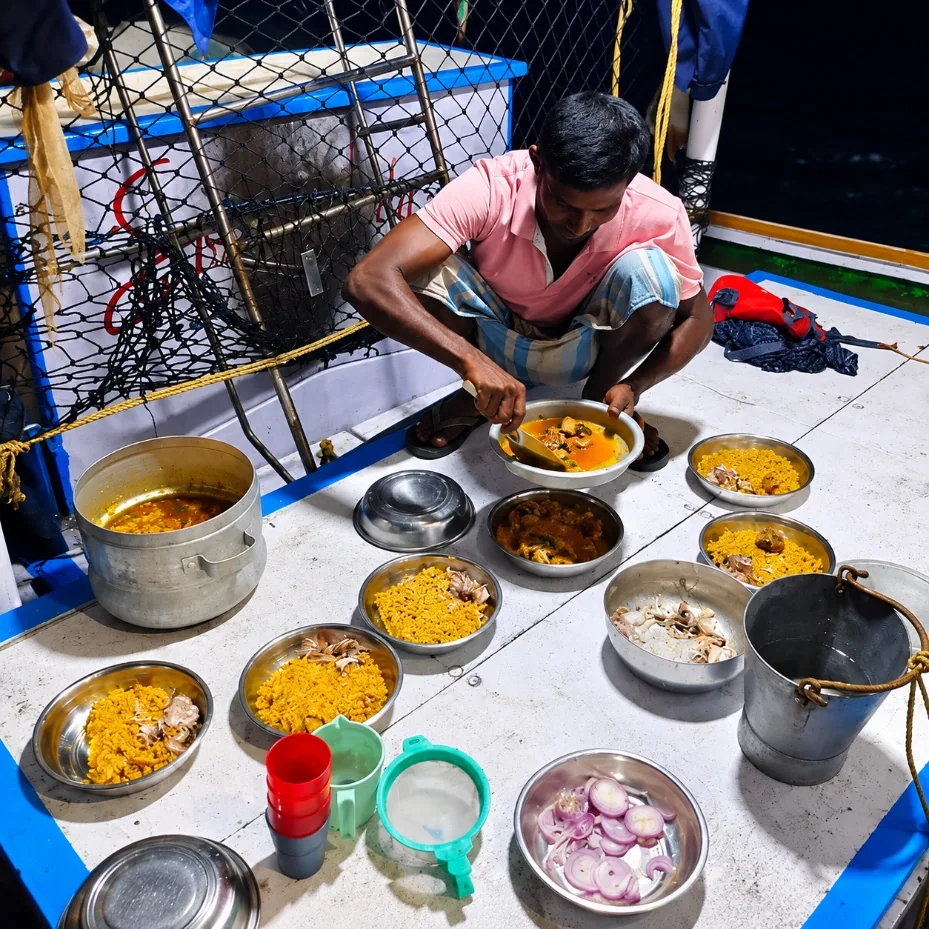
Eat, pray, fish
From a boat’s makeshift stove to the family kitchen, food tells the story of a changing archipelago.
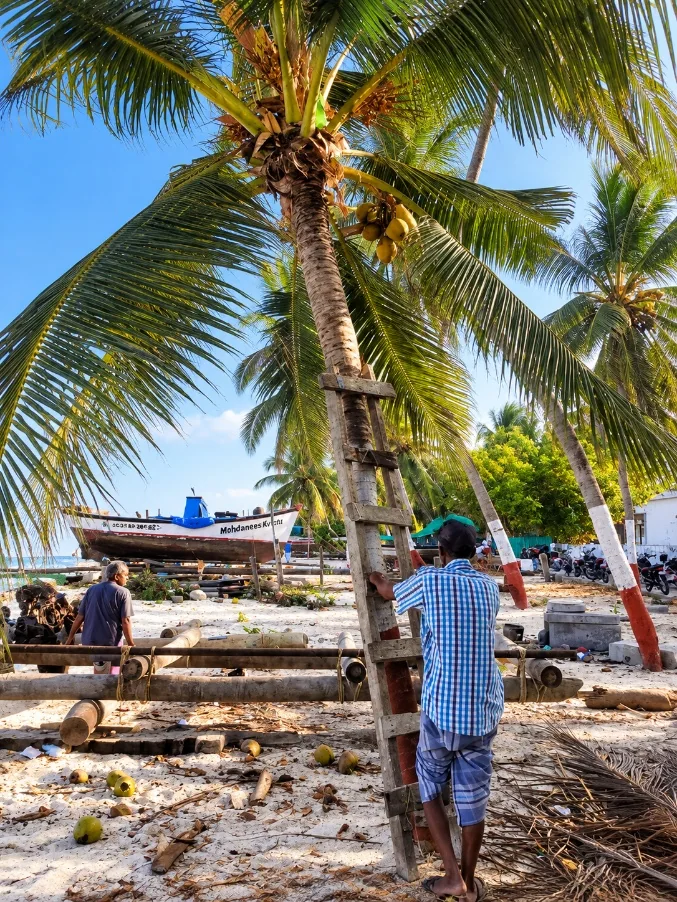
A coconut palm is a landscape, a livelihood and a remarkable store of useful materials.
The palms that define Lakshadweep’s skyline are part of its working life. Nuts become food, oil and copra. Husks yield coir. Leaves can be woven into roofing, fencing and household objects. Shells become fuel or craft materials.
Behind this abundance is skilled labour. Climbers assess palms and harvest nuts; other workers husk, split, dry, weave and process what comes down. The coconut economy links many small tasks, often close to home.
The source essay follows climbers whose knowledge has developed through observation and practice. Reading the tree, choosing a hold and handling a tool at height demand strength, judgement and experience.
This work also carries risk. Respect for the skill should go alongside attention to safety, training and the conditions that allow people to make a living from it.
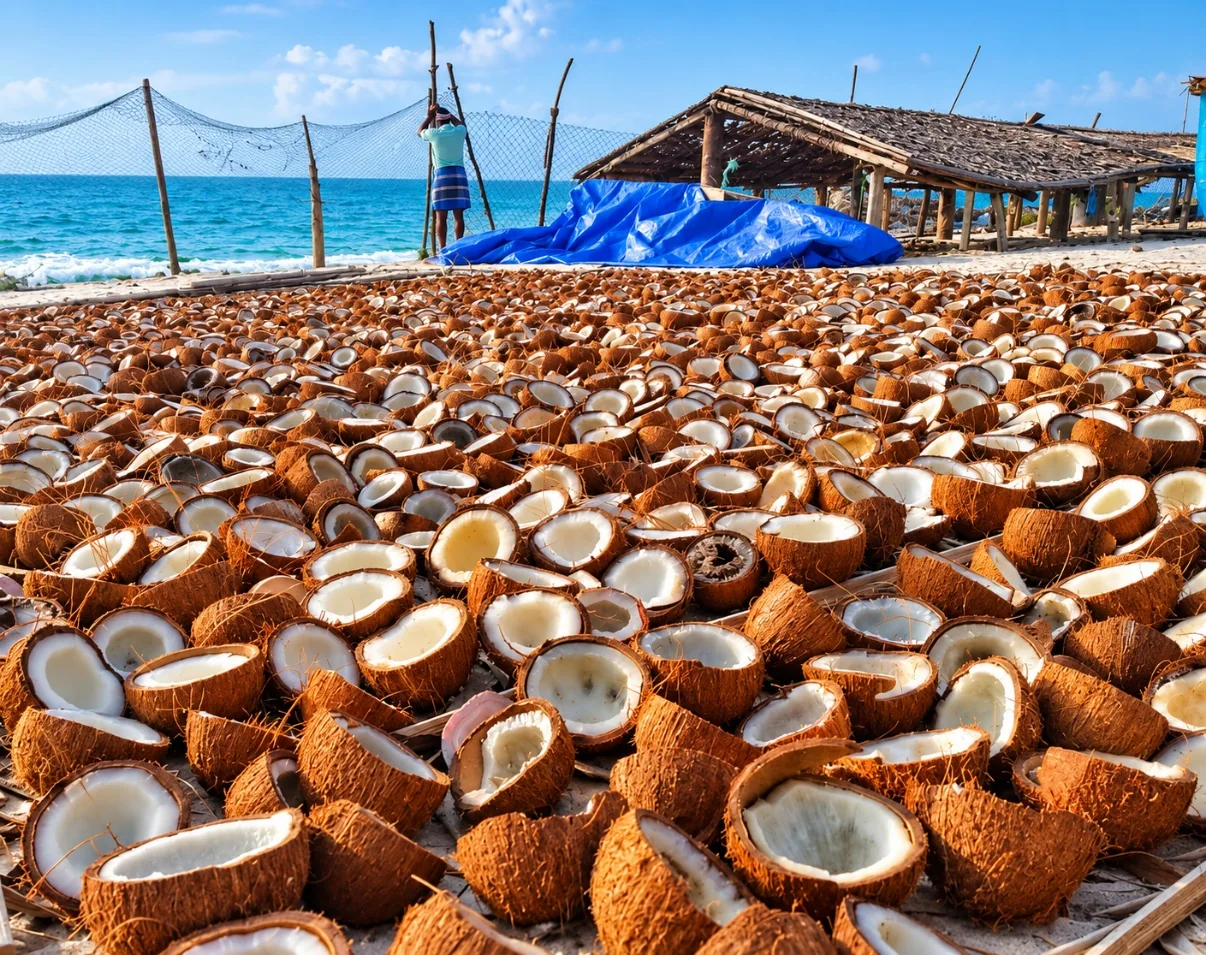
Copra is the dried coconut kernel used for oil extraction and other products. The source photographs show split nuts laid out to dry, a process that depends on space, weather and regular handling.
Coir connects the palm to the sea. Coconut fibre was used to bind the planks of traditional vessels and formed part of a wider trading economy. Archival images in the collection also record husk beating, mat weaving and coconut-leaf craft.
As younger people pursue new occupations, the source describes concerns about passing these skills to another generation. Craft enterprises and better processing can create opportunities, but their value depends on fair and viable work for islanders.
The palm’s story continues through people: the climber, the processor, the weaver and the cook. Preserving that knowledge is as important as preserving the familiar green skyline.
Adapted from Palm Springs Eternal.docx. Undated production totals, wage estimates and absolute claims about technology or working conditions have been omitted. The focus is the source’s account of materials, skills and livelihoods.
About this journal’s editorial approach ↗From a boat’s makeshift stove to the family kitchen, food tells the story of a changing archipelago.
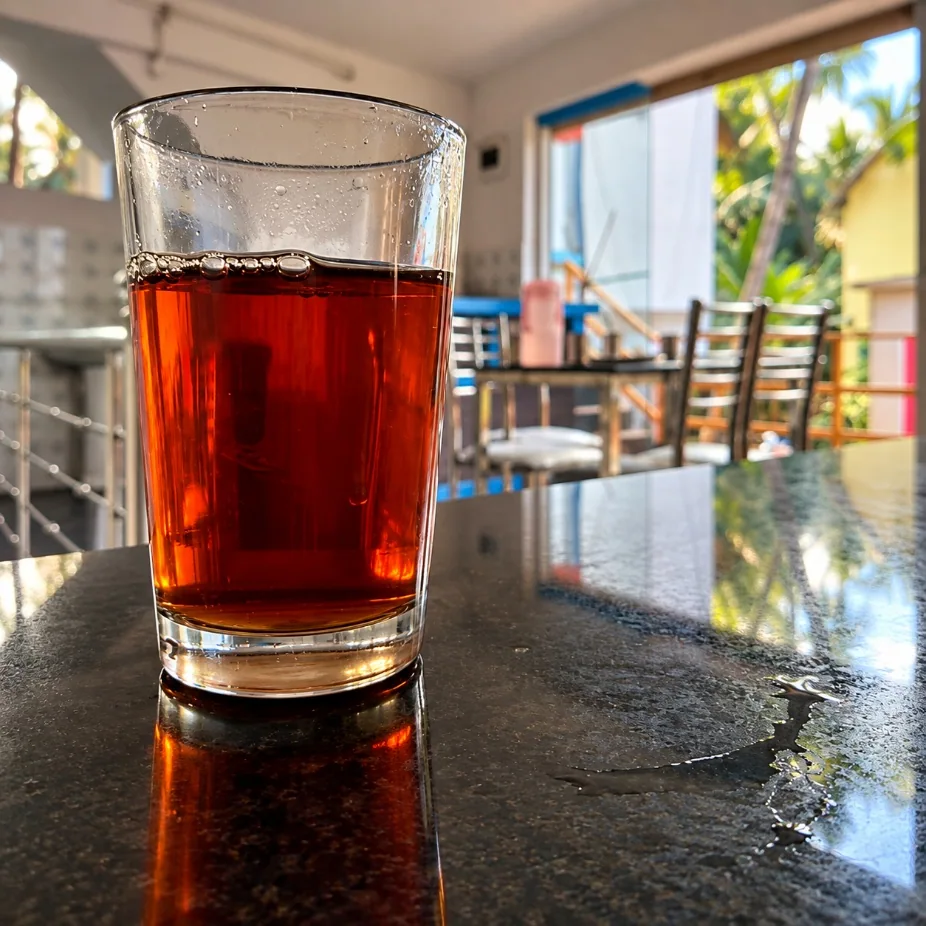
At a tea shop table, the pace of island life becomes a little easier to understand.