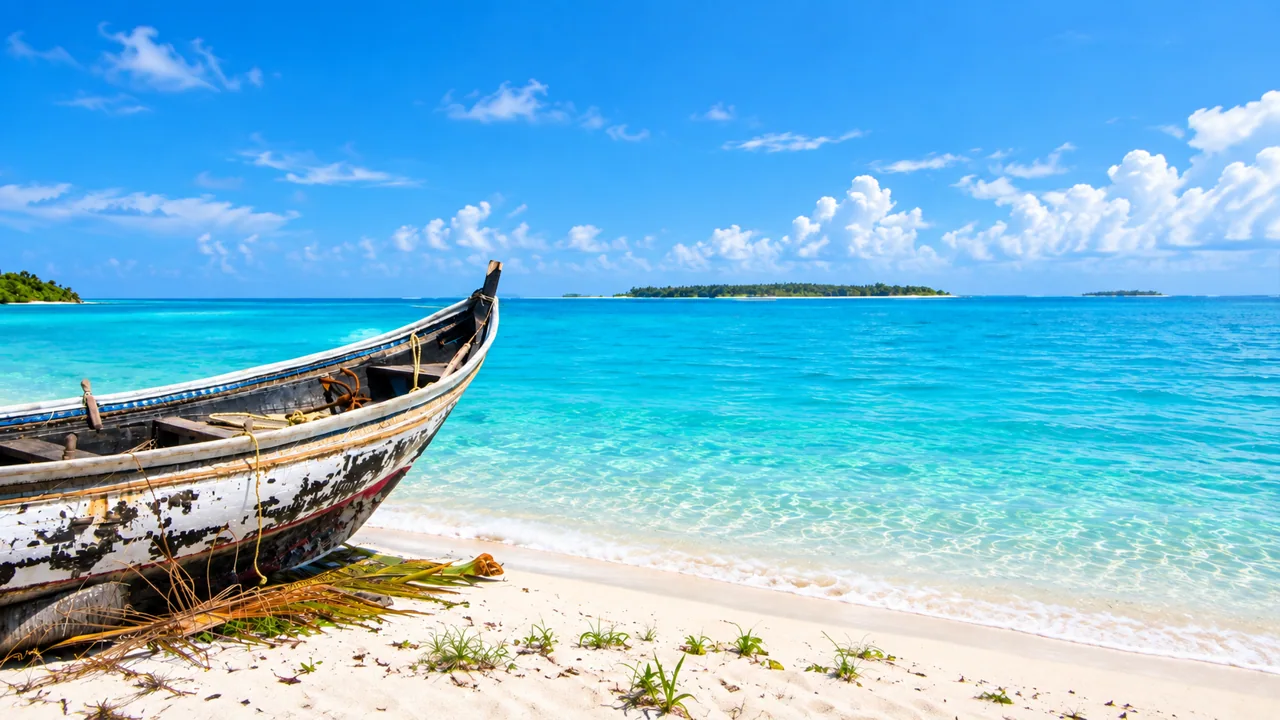
Freshwater fragility in a saltwater world
Beneath the coral sand lies a small, replenishable reserve that helps make island life possible.
One pole. One line. A relationship with the ocean built on generations of knowledge.
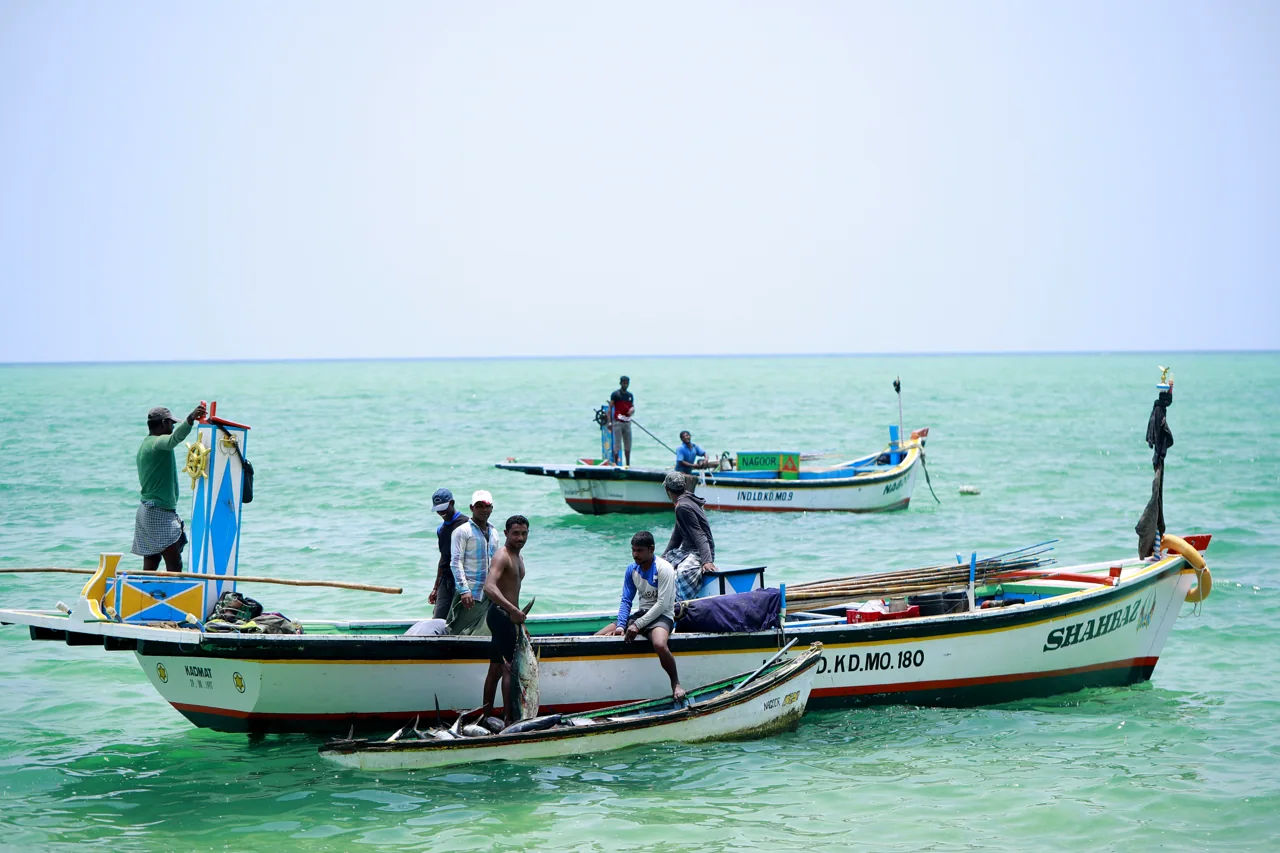
A dark patch on the horizon is enough to catch a skilled fisher’s attention. Beneath it, skipjack tuna may be feeding in a rush of silver bodies. In Wenzel Pinto’s account, boat captain Hasan and his colleague Saheer recognise the signs long before a visiting observer does. Seabirds, surface movement and experience all help them find the shoal.
Fishing in Lakshadweep is a livelihood and a body of knowledge. The pole-and-line fishery brings those two things together: a selective technique in which each tuna is caught individually, using a short line attached to a long pole.
The work begins close to the islands, with the careful capture of small live baitfish. These are kept alive in seawater until the crew heads out to find tuna. At sea, birds feeding above the water can help reveal where a shoal is hunting.
When the boat reaches the tuna, fishers scatter live bait and disturb the surface to keep the shoal feeding nearby. They cast barbless hooks and lift fish aboard with a practised movement. The hook releases quickly, allowing the fisher to cast again while the shoal remains close.
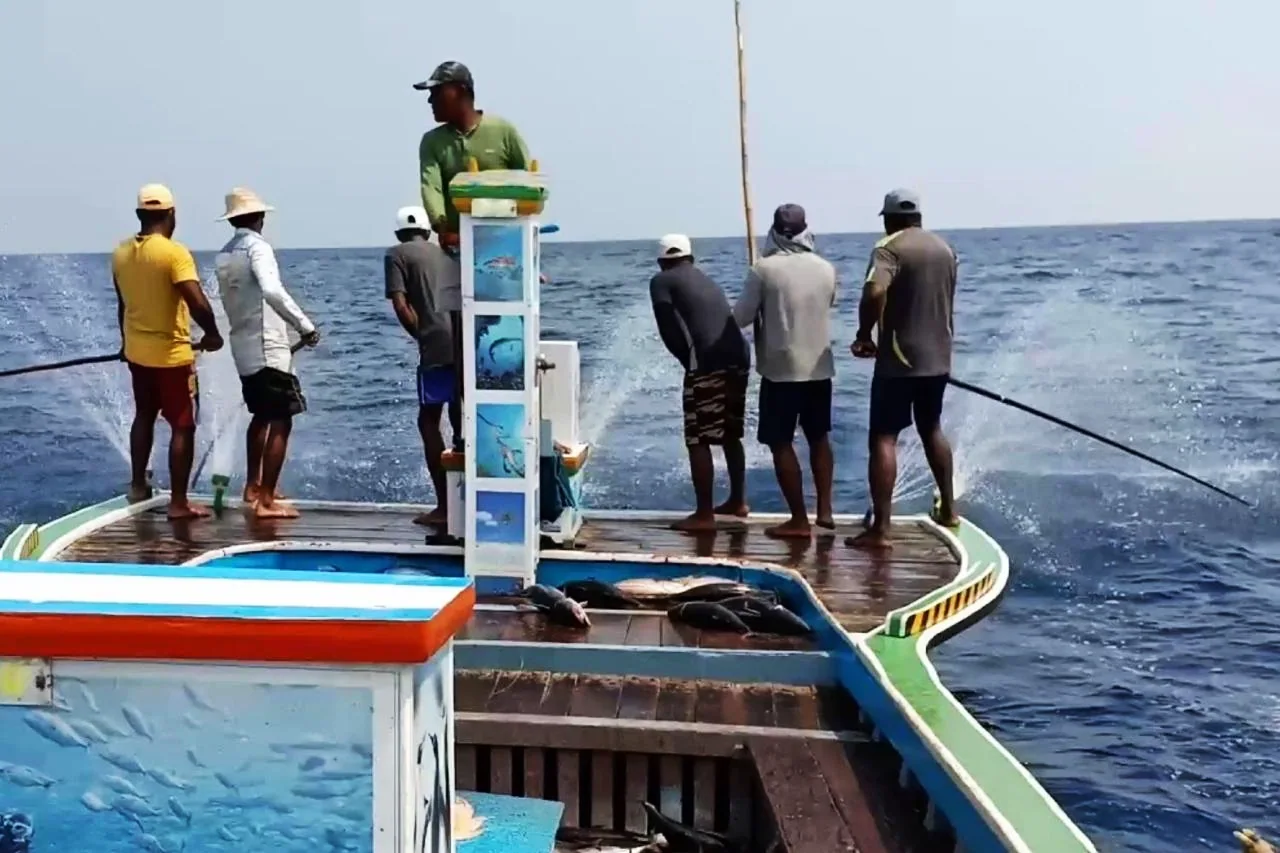
Catching tuna one at a time can reduce unwanted catch compared with less selective fishing methods. But the whole system matters. Tuna populations, fuel use, markets and the health of the reef fish used as bait all shape the fishery’s long-term prospects.
ICAR–CMFRI’s Lakshadweep Livebait Fisheries Management Plan identifies live bait as an essential part of the tuna fishery and sets out measures to manage that resource. Sustainability is an ongoing practice, supported by monitoring and local participation, rather than a permanent label attached to a fishing method.
Back on shore, tuna connects crews to processors, traders and family kitchens. Some is eaten fresh; some becomes mas, the boiled, smoked and dried fish that links island food traditions with wider Indian Ocean trade.
The future of this fishery depends on recognising both kinds of expertise: the accumulated knowledge of the people who work these waters, and the scientific evidence needed to understand a changing ocean.
Adapted from Fishing for sustainability.docx. The source essay’s absolute claims about zero bycatch, stable tuna stocks and guaranteed sustainability have been qualified. Undated global fisheries statistics have been omitted.
About this journal’s editorial approach ↗Beneath the coral sand lies a small, replenishable reserve that helps make island life possible.
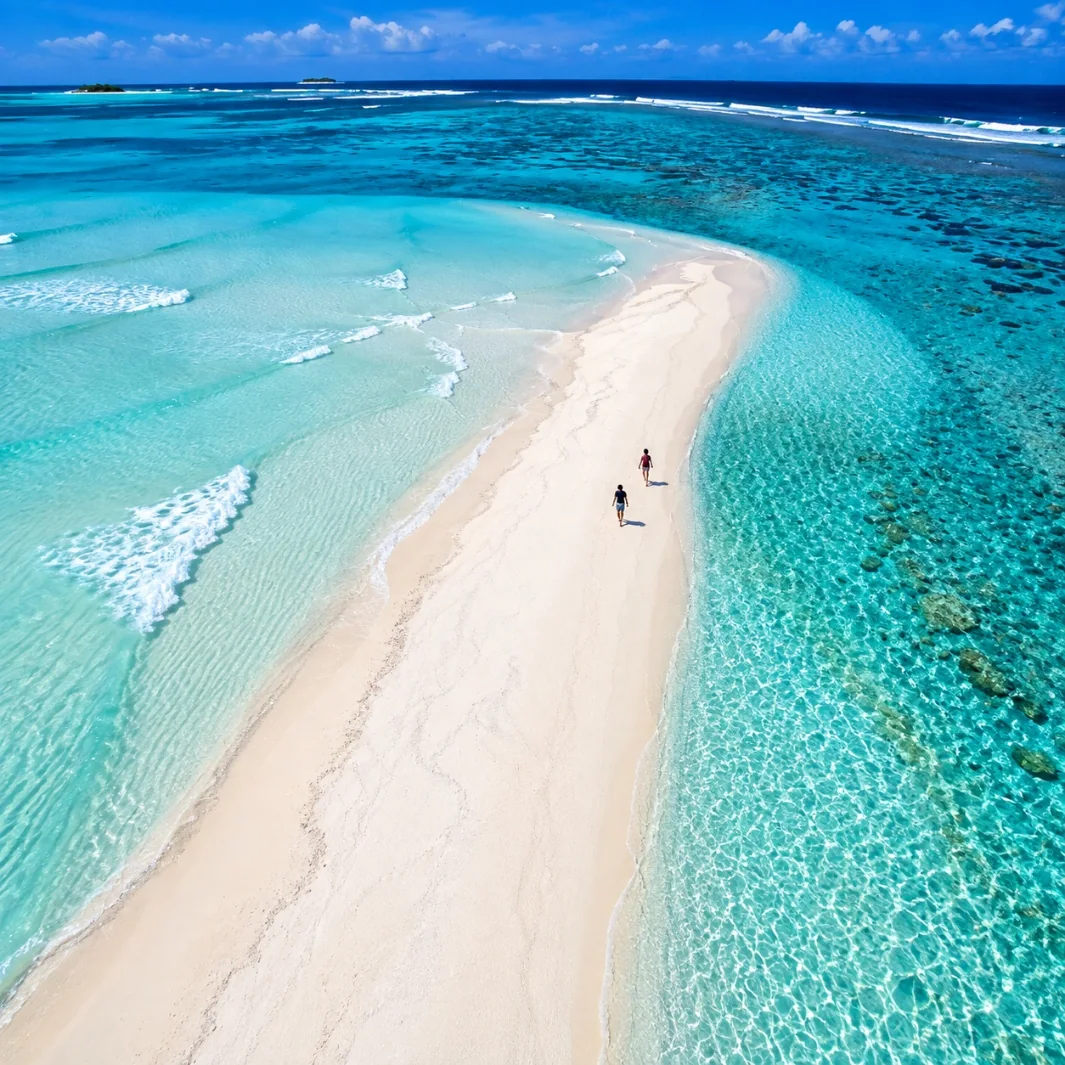
Coral, sand, waves and time: the processes that shape the ground beneath Lakshadweep.