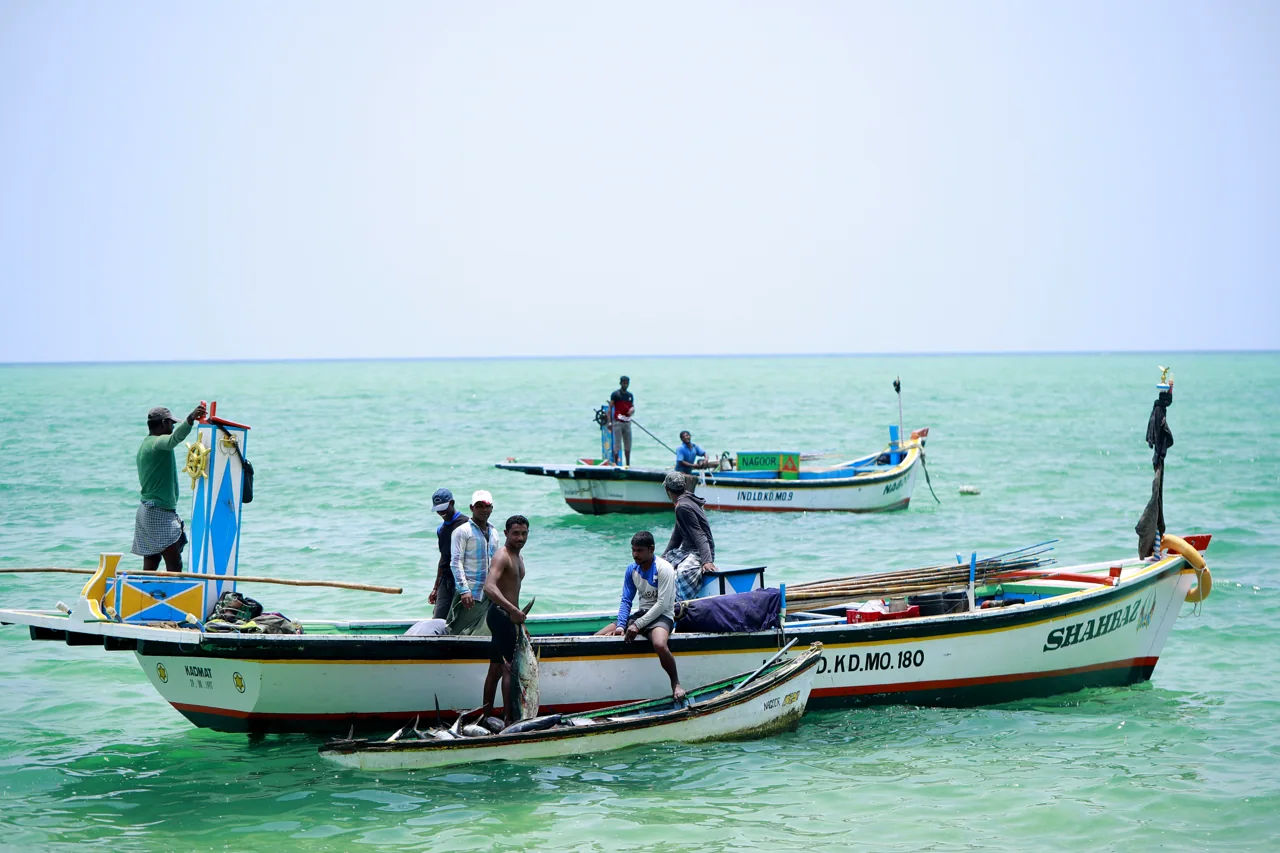
Fishing for sustainability
One pole. One line. A relationship with the ocean built on generations of knowledge.
Giant-clam shells preserve clues that can help researchers reconstruct past conditions in the lagoon.
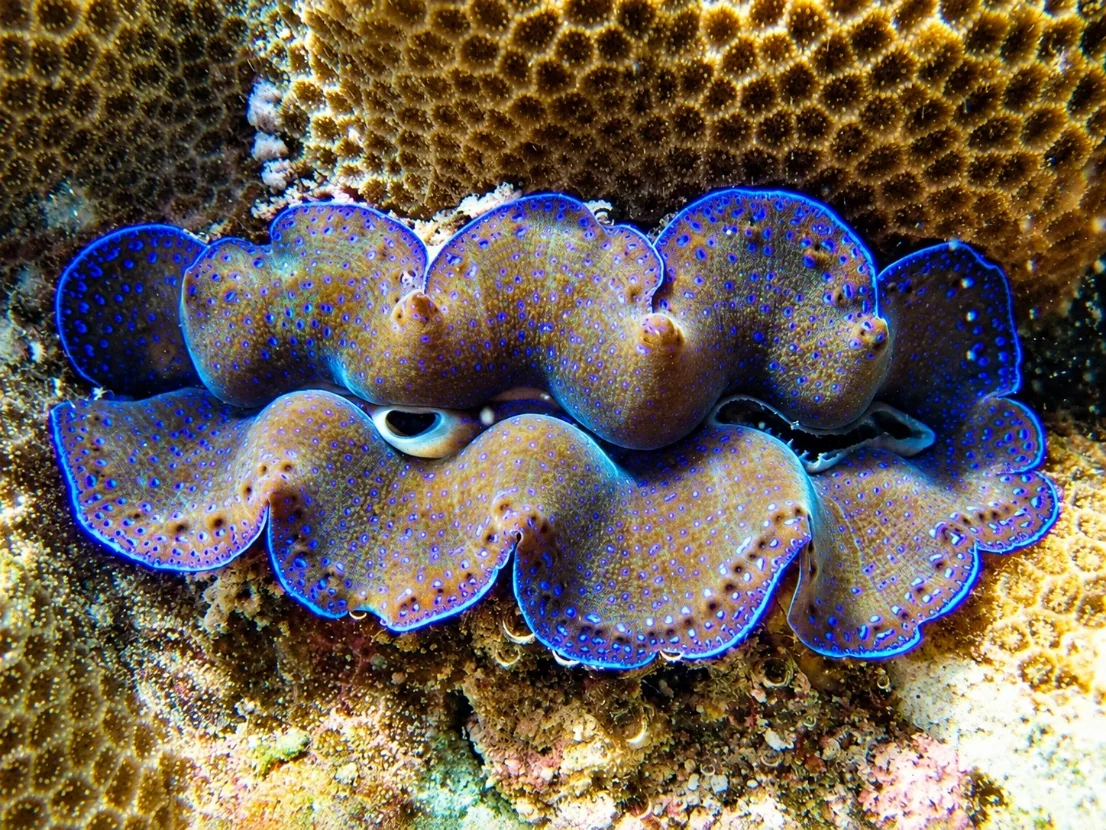
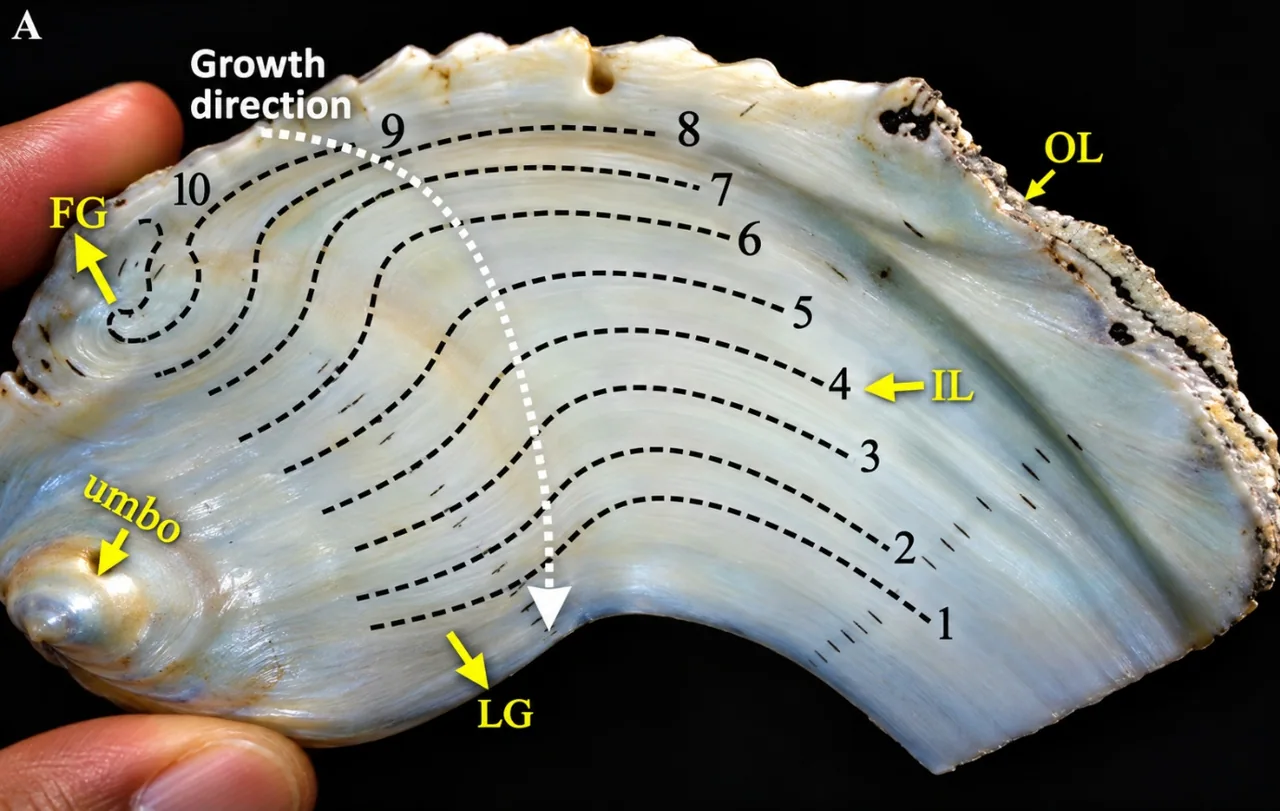
A giant clam adds material to its shell as it grows. The resulting bands can preserve information about that growth and the conditions in which it occurred. For researchers, the shell becomes a small environmental archive.
The supplied essay highlights work by A. A. Fousiya and colleagues on Tridacna maxima from Minicoy. Their 2022 paper examines oxygen and carbon isotope records in a shell from the island’s lagoon.
The researchers identified a change in shell formation and an unusual oxygen-isotope signal associated with the region’s 2010 warming and bleaching event. Such evidence can connect a living organism’s growth history with an independently documented environmental disturbance.
That connection requires careful interpretation. Shell chemistry reflects biological processes as well as environmental conditions; it is not a direct thermometer that can be read without context.
Giant clams host photosynthetic algae within their tissues. These partners contribute to their nutrition, and environmental stress can disrupt the relationship. Changes in growth may leave a lasting trace in the shell.
The source uses the idea of memory as a metaphor. The clam is not remembering a storm or warm season in the human sense; researchers are interpreting physical and chemical evidence accumulated during its life.
Shell archives can add detail to our understanding of environments where long instrumental records are limited. Their value grows when interpreted alongside other measurements and independent evidence.
The study invites a closer look at the lagoon. Even an apparently still shell can hold clues to a changing ocean.
Adapted from Giant Clams from Lakshadweep remember the past.docx. The paper concerns a studied specimen, not a universal response for all clams. Broad lifespan claims and a simplified temperature-to-isotope conversion in the source have been omitted.
One pole. One line. A relationship with the ocean built on generations of knowledge.
Beneath the coral sand lies a small, replenishable reserve that helps make island life possible.