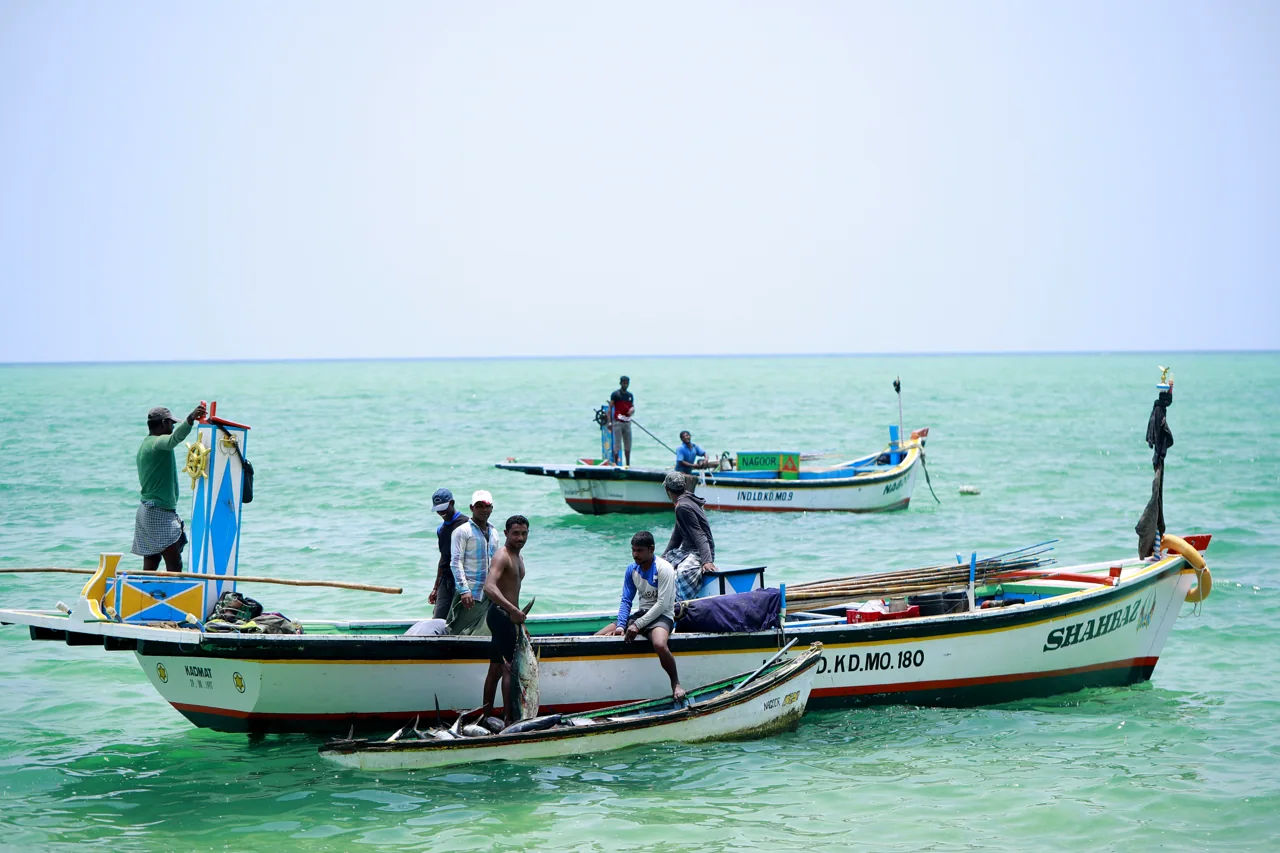
Fishing for sustainability
One pole. One line. A relationship with the ocean built on generations of knowledge.
What happens when scientific records and island memories describe environmental change in different ways?
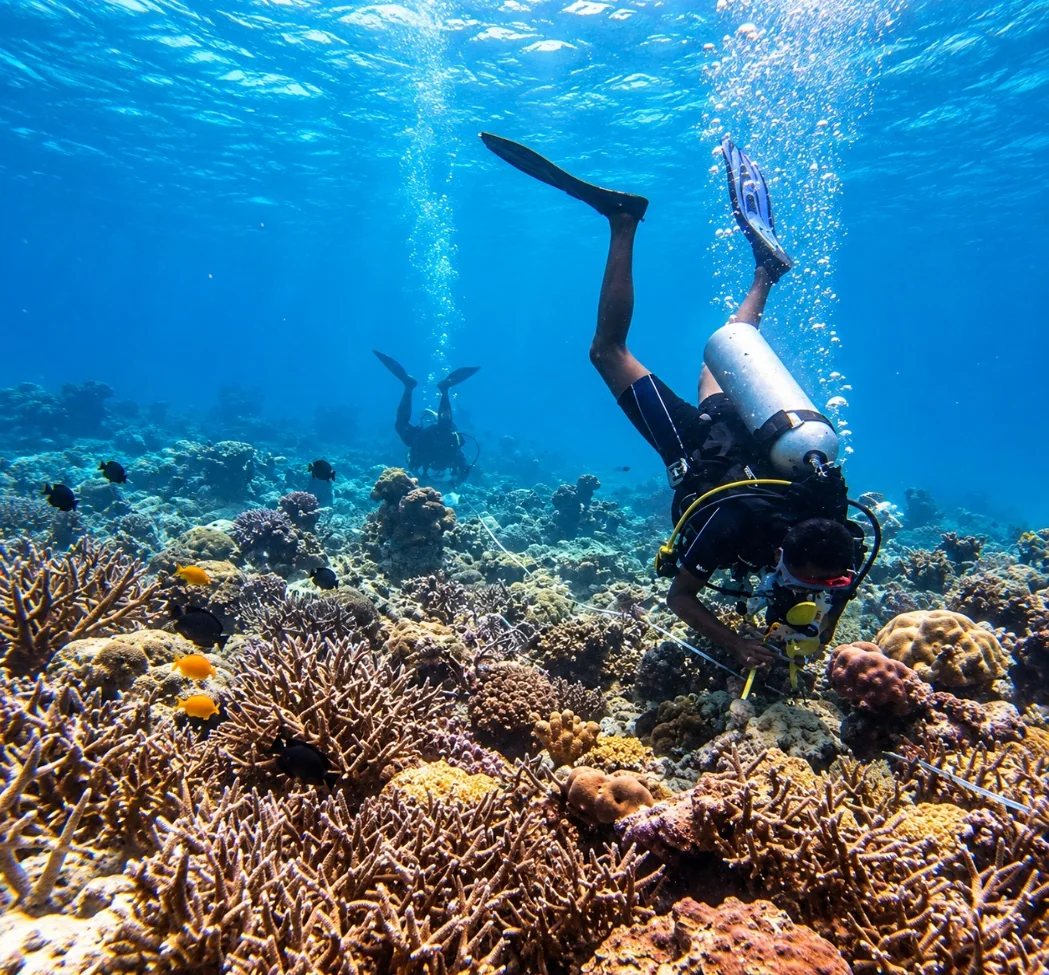
In his supplied essay, marine scientist Rohan Arthur reflects on a recurring difference between his own account of Lakshadweep and the accounts of island friends. He thinks in terms of reef surveys, bleaching and recovery. Some islanders organise their memories around a particular storm or the 2004 Indian Ocean tsunami.
These are not interchangeable forms of evidence. Yet the difference matters for communication. A global trend is often understood through a local event that changed a journey, a fishing trip or a household’s water supply.
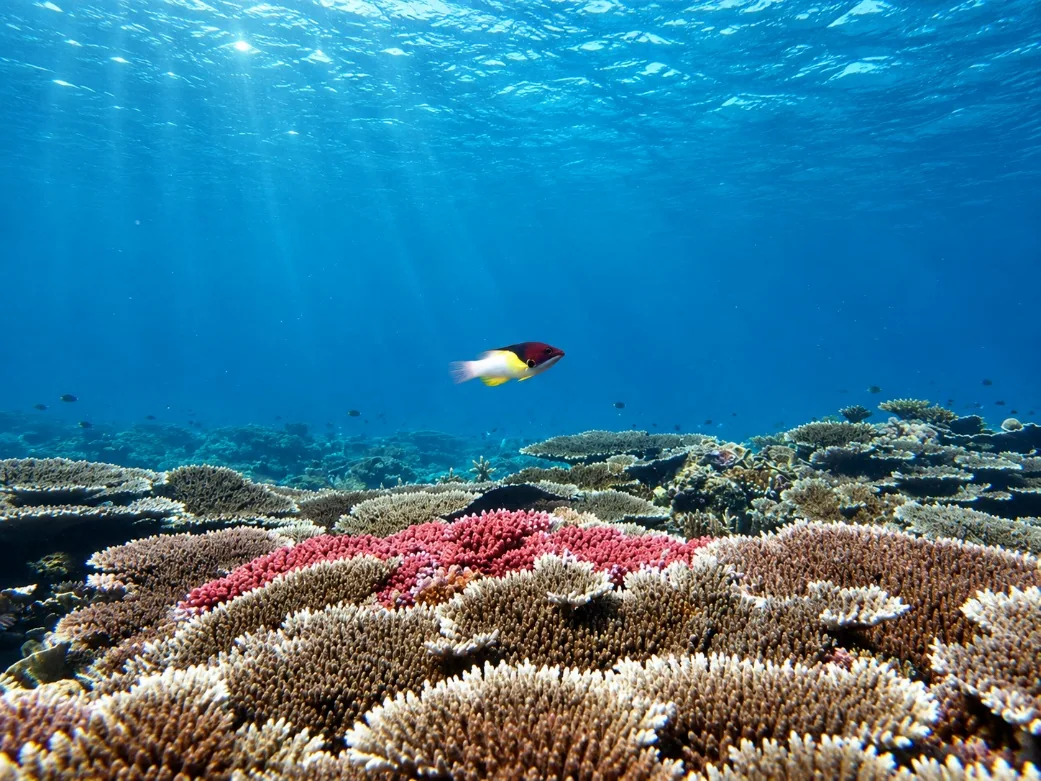
Long-term work by the Nature Conservation Foundation has documented repeated bleaching and recovery in Lakshadweep. The 1998, 2010 and 2016 events feature prominently in Arthur’s account of reefs losing living coral and structural complexity.
Heat stress can disrupt the relationship between coral animals and their symbiotic algae. Repeated severe disturbances can leave less time for recovery, affecting habitat and the functions that reefs perform.
Arthur describes Cyclone Ockhi in 2017 as a turning point in conversations about environmental change. The storm provided a shared reference: people could speak of a before and an after.
The significance of that memory does not establish that climate change caused a particular event. It shows how experience shapes the questions people ask. Observations of altered catches, rougher journeys or saltier wells are starting points for dialogue, not substitutes for testing causes.
The essay’s central argument is about communication. Scientific knowledge becomes more useful when it connects to the concerns people already navigate: food, water, homes and dependable work.
Local knowledge and systematic research can inform each other without being collapsed into the same thing. The challenge is to make the reef’s changing condition legible in the language of everyday island life.
Adapted from Making Sense of Climate Change in the Lakshadweep Archipelago.docx. This is a condensed, third-person adaptation, not a new first-person essay by the original author. Community explanations are presented as reported perceptions. No precise date for island uninhabitability is asserted.
One pole. One line. A relationship with the ocean built on generations of knowledge.
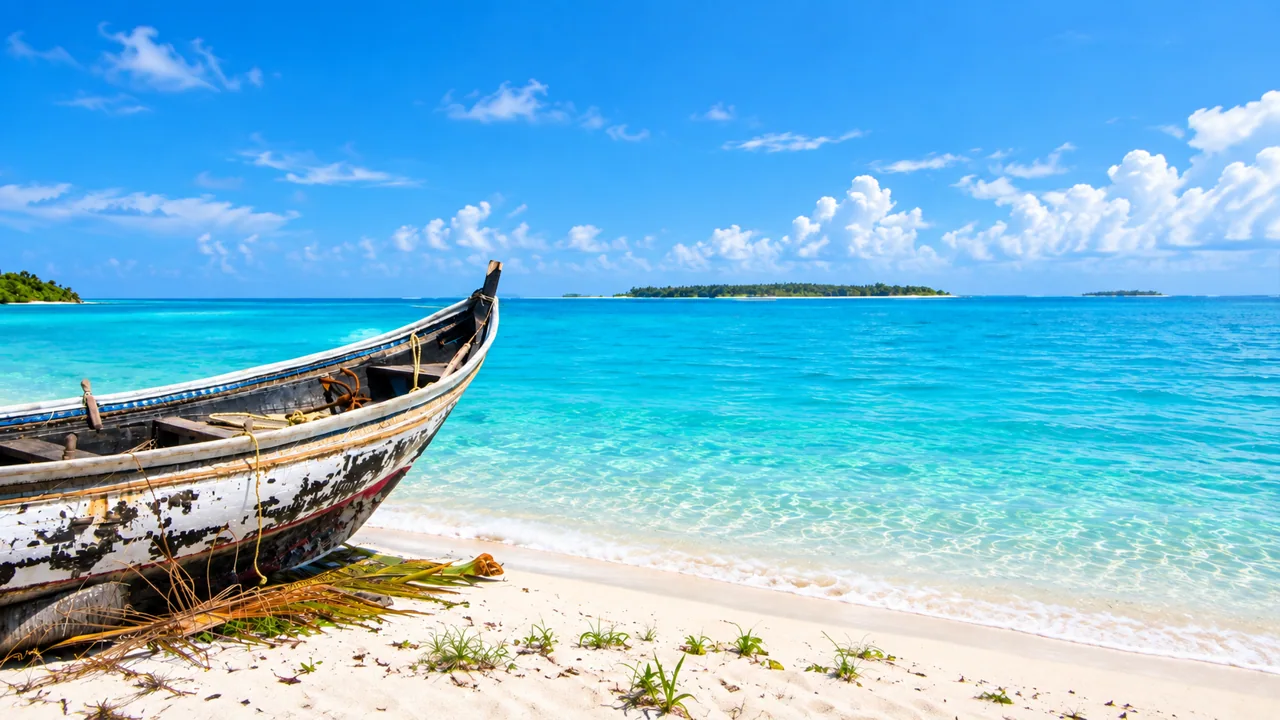
Beneath the coral sand lies a small, replenishable reserve that helps make island life possible.